
SCIENCE & DISCOVERY
The Discovery of the Endocannabinoid System
A receptor in a rat brain, a molecule named after a Sanskrit word for joy, and a quiet revolution in pharmacology.
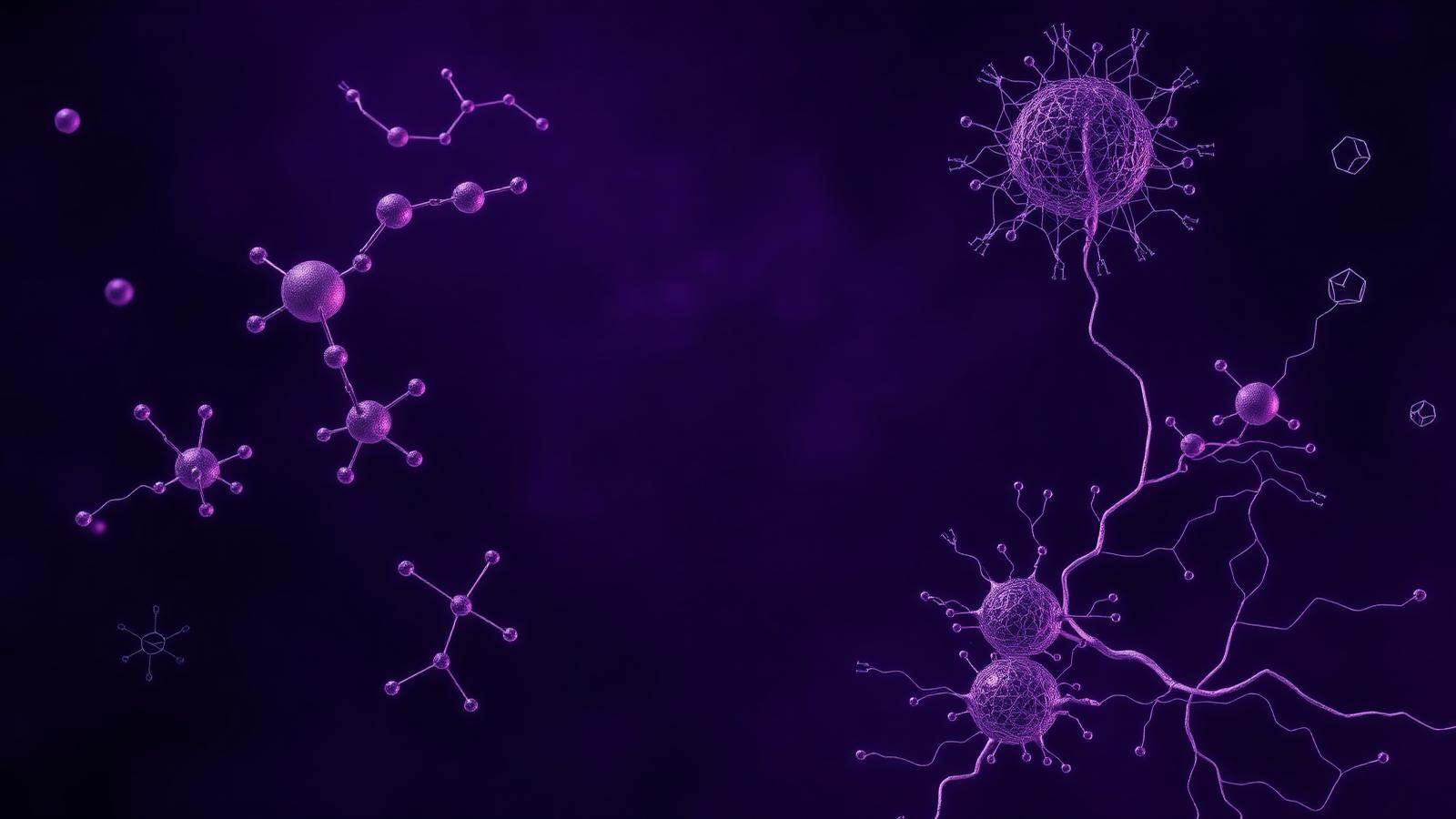
"The body had been speaking cannabis's language for as long as there had been bodies. Nobody knew until the 1990s."
For most of the twentieth century, cannabis was a pharmacological black box. Researchers knew it did something, but they did not know why. The answer, when it finally came together, was one of the more unexpected stories in modern pharmacology — the discovery that the human body has its own internal cannabinoid system, one that the plant happens to switch on.
1964: identifying THC
The first step came in 1964, when the Israeli chemist Raphael Mechoulam and his collaborators at the Weizmann Institute isolated and characterised tetrahydrocannabinol, or THC, as the principal psychoactive constituent of cannabis. They also isolated cannabidiol (CBD), which had been described earlier but not fully characterised. Mechoulam's work made it possible, for the first time, to study cannabis pharmacology as chemistry rather than folklore.
The 1988 receptor discovery
For roughly twenty years after Mechoulam's work, the central question stayed open: how does THC actually act on the brain? Various hypotheses were tested, including the idea that THC simply dissolved into cell membranes. In 1988, Allyn Howlett's laboratory in St Louis identified a specific receptor in rat brain tissue that bound THC with high affinity. They named it CB1.
That discovery reframed the problem. The brain had a receptor for cannabis. The obvious next question was why.
1992: anandamide
In 1992, Mechoulam's team, now working with American collaborators, identified the molecule the body produces to bind that receptor naturally. They named it anandamide, from the Sanskrit ānanda, meaning bliss or joy. It was the first known endocannabinoid — a signalling molecule the body makes for its own purposes that happens to bind the same receptor cannabis does.
A second endocannabinoid, 2-AG, was identified shortly afterwards. A second receptor, CB2 — concentrated in the immune system rather than the central nervous system — was identified in 1993. Together, these formed the skeleton of what is now called the endocannabinoid system.
What the endocannabinoid system actually does
The endocannabinoid system is now understood to play a role in regulating a wide range of physiological functions — pain, mood, appetite, sleep, immune response, memory. It is generally described as a homeostatic system, meaning that its job is to keep other systems in balance rather than to drive any single process.
This does not mean that cannabis is medicine. It does mean that there is a coherent biological reason why a plant compound can produce such a wide range of effects, and why specific cannabinoids are being studied in relation to specific conditions in serious clinical research today.
Why this matters historically
For decades, the case for taking cannabis seriously as a medical subject rested on history, folklore and patient experience. The endocannabinoid system gave it a mechanism. That is what changed in the early 1990s. The clinical evidence base is still being built. But the underlying biology is no longer in dispute.
Where to go next
For the long historical context, read Cannabis as Medicine: A Short History. For the modern policy story, see How Medical Cannabis Returned to the UK.
Related from the archive


STRICTLY 18+
Haze Cartel sells smoking accessories intended for adults aged 18 or over. Proof of age may be required on delivery.